
Key takeaways
- Prevention beats cure: strong colonies, good forage, clean equipment and regular inspections stop most problems early.
- Mites (Varroa and Tropilaelaps) are the biggest threat to Apis mellifera. Monitor them regularly and treat only with products approved for beehives.
- Thai sacbrood virus is the most serious disease of Apis cerana. There is no cure; management focuses on brood breaks, hygiene and resistant stock.
- Wax moth and hornets mainly ruin weak colonies, so keep colonies strong and entrances defensible.
Even the best-kept apiary will face pests and diseases sooner or later. The key is to spot problems early, when they are still easy to manage. This guide covers the threats beekeepers in Nepal meet most often.
Only use treatments approved for beehives, and follow the label. Never put crop pesticides, household insecticides or unlabelled chemicals in a hive. They can kill bees, leave residues in honey and wax, and make mites resistant. Don’t treat while honey boxes for harvest are on the hive unless the product label says it’s allowed. When in doubt, ask your district agriculture or livestock office.
Quick guide
| Problem | Main bee affected | Signs | Key actions |
|---|---|---|---|
| Varroa mite | mellifera | Mites on bees or in brood; deformed wings; patchy brood | Monitor monthly; approved treatments; brood breaks |
| Tropilaelaps mite | mellifera | Fast-moving small mites on combs; patchy, damaged brood | Brood break; approved treatments |
| Thai sacbrood virus | cerana | Dead larvae like fluid-filled sacs; uncapped cells; colony dwindles or absconds | Brood break; hygiene; don’t move combs; requeen |
| European foulbrood | mellifera (mainly) | Twisted, discoloured, melted larvae before capping; sour smell | Get expert diagnosis; follow official advice |
| Wax moth | Both | Webbing and tunnels in comb; larvae in weak hives and stored comb | Keep colonies strong; protect stored combs |
| Hornets | Both (worst for mellifera) | Hornets hovering at the entrance; dead bees; colony stops foraging | Reduce entrances; trap or remove hornets; destroy nearby nests safely |
| Pesticide poisoning | Both | Many dead or twitching bees at the entrance, suddenly | Talk to farmers about spraying; move hives during spraying |
Mites
Varroa (Varroa destructor)
Varroa mites feed on bees and their brood and spread viruses, including deformed wing virus. The Asian honeybee is the mite’s original host and keeps it under control by grooming and removing infested brood. The European honeybee can’t, so a mellifera colony left untreated will usually collapse within a year or two.
Monitor regularly. The most reliable method is to sample about 300 bees (roughly half a cup) from a brood frame and wash them in alcohol or roll them in powdered sugar to count the mites. A common rule of thumb is to treat when you find more than 2–3 mites per 100 bees in the active season.
Manage with an integrated approach:
- Use approved treatments, such as products based on organic acids (formic or oxalic acid) or thymol, and rotate treatment types to avoid resistance.
- Create a brood break (for example by caging the queen or making a split): mites breed only in capped brood, so a break makes treatment far more effective.
- Remove capped drone brood in spring. Mites prefer it, so removing it removes mites.
Tropilaelaps (Tropilaelaps species)
Tropilaelaps mites are native to Asia, where their natural hosts are the giant honeybees, and they are a serious pest of mellifera in Nepal and across Asia. They breed faster than Varroa and run quickly across the comb. Unlike Varroa, they can only survive a few days without brood, which makes brood breaks especially effective.
Tropilaelaps is now spreading westward towards Europe, where beekeepers have never had to deal with it. See our news roundup.
Brood diseases
Thai sacbrood virus
Thai sacbrood virus has caused heavy losses of Apis cerana colonies in Nepal and across South Asia. Infected larvae die just before or after their cells are capped; they turn pale yellow to brown and become a fluid-filled sac, often with a raised head end. Workers remove the dead larvae, leaving a scattered brood pattern, and badly affected colonies often dwindle or abscond.
There is no cure. Beekeepers manage it by:
- Creating a brood break, by caging the queen for about two weeks or replacing her, so that workers can clean out infected brood.
- Not moving combs, honey or equipment from sick colonies to healthy ones.
- Keeping colonies strong with good forage and, if needed, feeding.
- Requeening from colonies that have stayed healthy, so that more tolerant stock is selected over time.
European foulbrood
A bacterial disease that mostly affects mellifera. Larvae die before their cells are capped, turning twisted, yellowish to brown and “melted” in the cell, often with a sour smell. Get an expert diagnosis. Antibiotics should only be used under official or veterinary guidance, because misuse leaves residues in honey and breeds resistance. In many cases, shaking bees onto clean frames and destroying the old combs is recommended.
Wax moth
Wax moth larvae tunnel through comb, eating wax, pollen and cast-off cocoons, and leave a mess of silk webbing. They rarely harm strong colonies but can destroy weak or queenless colonies and stored combs, especially in the warm, humid monsoon.
- Keep colonies strong, and don’t give them more space than they can patrol.
- Remove unused combs from weak hives.
- Store spare combs somewhere cool, dry and airy, or freeze them for at least 24–48 hours to kill all stages before storing them sealed.
Hornets
Large hornets (Vespa species) hunt bees at hive entrances, especially from late monsoon through autumn. A few hornets can stop a colony from foraging; a group can wipe out a weak mellifera colony. Asian honeybees fight back by forming a tight ball around a hornet and “cooking” it with body heat, a defence European bees lack.
- Reduce entrances so guard bees can defend them.
- Trap or remove hornets that hover at your hives; many beekeepers swat them at the entrance.
- Find and destroy nearby nests, but only with proper protection or professional help. Hornet stings are dangerous.
Pesticide poisoning
Sudden piles of dead and dying bees at the entrance, often trembling or crawling, usually mean poisoning from crop spraying. Talk to nearby farmers: ask them to avoid spraying flowering crops, to spray in the evening when bees aren’t flying, and to warn you in advance so you can close or move your hives.
Make inspections count
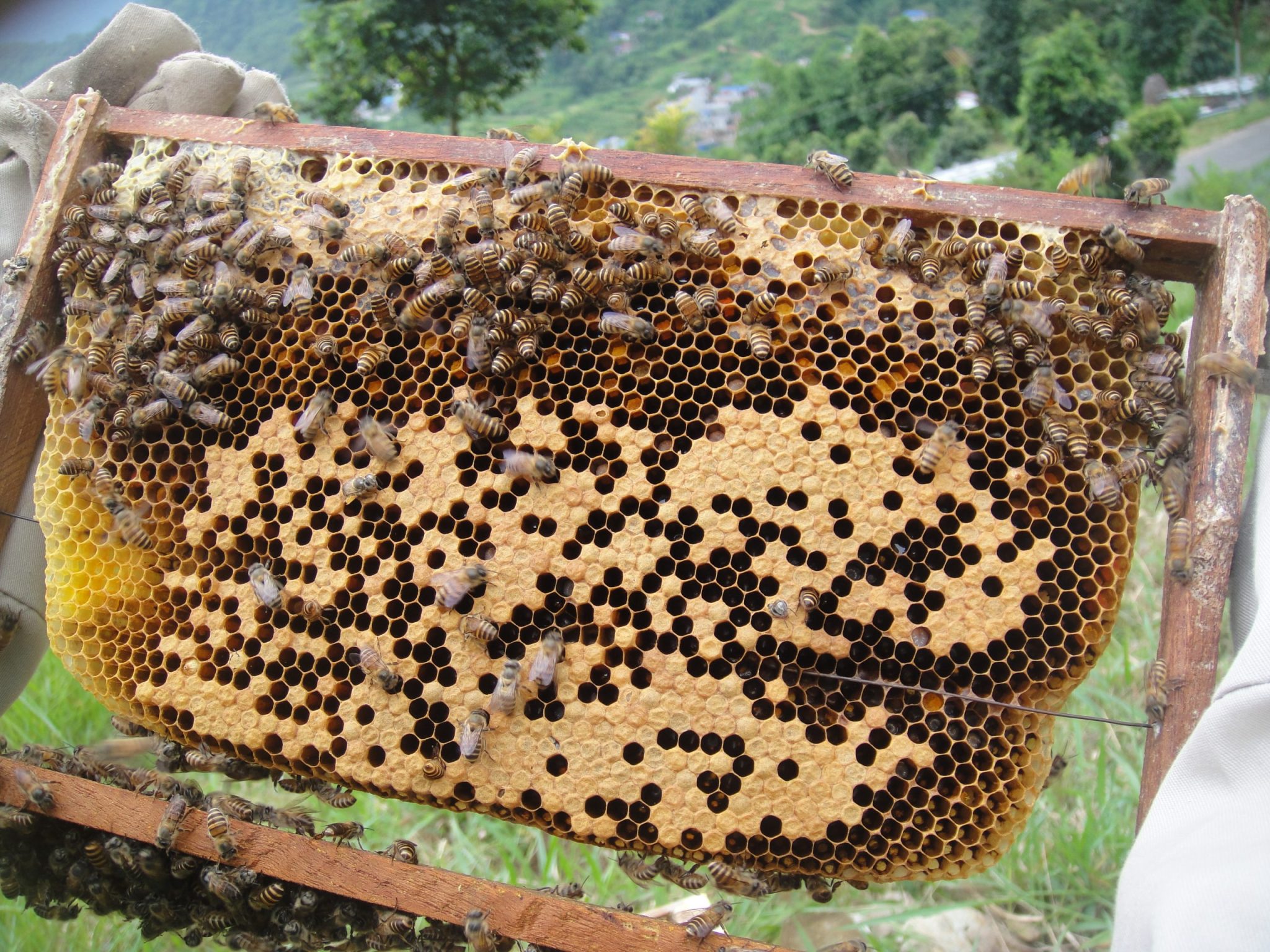
At every inspection, check the brood. Look for a compact pattern, healthy pearly-white larvae, and evenly capped cells. If something looks wrong, take clear photos and ask an experienced beekeeper or your local agriculture office. Unusual or serious disease outbreaks should be reported, because they can spread quickly between apiaries.
New to the brood cycle? Read Inside the Hive.
Sources and further reading
- Honey Bee Health Coalition, Tools for Varroa Management (current edition).
- Oldroyd, B.P. and Wongsiri, S. (2006). Asian Honey Bees: Biology, Conservation, and Human Interactions. Harvard University Press.
- UK National Bee Unit (BeeBase), guidance on Tropilaelaps and foulbrood diseases.