
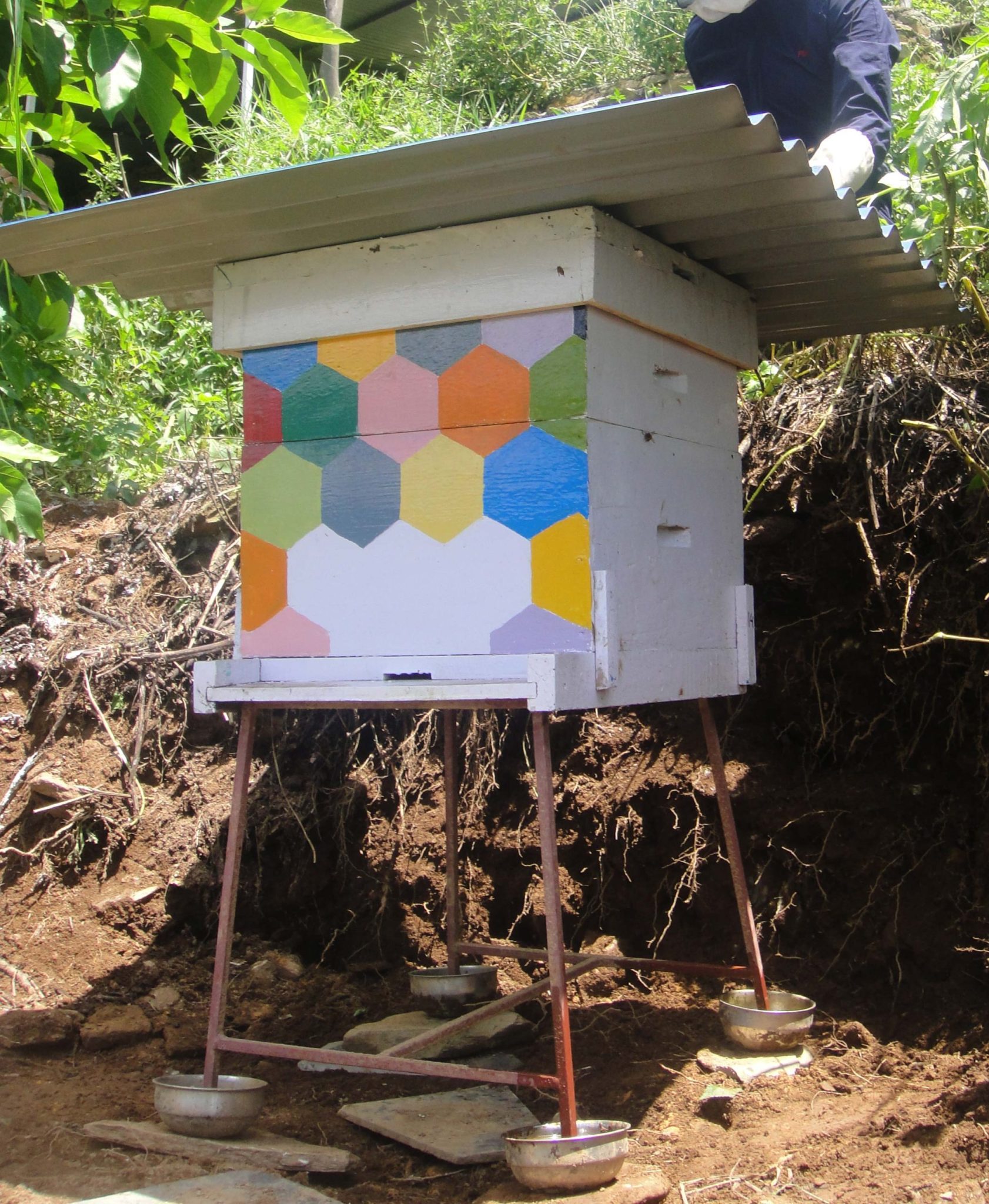
This is the official Beekeeping Manual for Training of Trainers (ToT), Officer Level, prepared by the Apiculture Development Centre (ADC), Godawari, Lalitpur under the Government of Nepal. It was written to train the people who train beekeepers: agriculture officers at federal, provincial and local level, and the cooperatives, training centres and private trainers who run beekeeping courses across the country.
Beekeeping training in Nepal is offered by many bodies, and the content often varies from one course to the next. The manual sets out a single, consistent curriculum so that a farmer trained in Jumla learns the same sound practices as one trained in Chitwan. It was written and edited by a panel of Nepali experts from IAAS, the ADC, the Center for Industrial Entomology Development, AITC and the Ministry of Agriculture and Livestock Development.
You can read the full manual below, open it full screen, or download it to keep.
On a phone, tap Open full screen to read the manual in your phone’s PDF viewer, or download it to read offline.
What’s inside
The manual is organised as 43 training sessions, each with objectives, content and practical exercises. They fall into a few broad areas:
- Bee biology: honeybee species of Nepal and their conservation, the life cycle and division of labour in the colony, the waggle dance and bee pheromones.
- Colony management: hives and equipment, colony inspection, seasonal management, swarming and absconding, colony division and uniting, robbing, laying workers, migration and artificial feeding.
- Bee health: major diseases and malnutrition, Varroa and other mites, internal and external enemies, and the safe use of pesticides around bees.
- Queen rearing: selecting mother colonies, grafting by the Doolittle method, caring for new queens, queen banking and instrumental insemination.
- Bee pasture and pollination: bee forage plants and why bees matter for crop yields.
- Hive products: producing, processing and storing honey and other bee products, wax processing and comb foundation, national and international honey standards, and apitherapy.
- The business side: benefit-cost analysis, business plans, entrepreneurship and cooperatives, the honey value chain, marketing, bee insurance in Nepal and beekeeping policy.
- Training skills: training needs assessment, training methods, facilitation skills and practical assessment.
How the course is designed
The manual is built around a 15-day course for 20–25 participants: 14 days of theory and hands-on sessions plus one field visit. Each day has four sessions of 90 minutes, 60 in total, of which 34 are classroom and 26 are practical. Participants are assessed at the start and at the end, and the coordinator writes a completion report.
Who should read it
- Trainers and extension officers preparing beekeeping courses, who can use it session by session.
- Commercial beekeepers who want a thorough reference, especially on queen rearing, mite control and business planning.
- Students and researchers looking for a Nepal-specific overview of apiculture.
- Cooperatives and new entrepreneurs planning a honey business or value-chain project.
New to bees? Start with our shorter guides, such as Your First Hive and Government Support and Training for Beekeepers in Nepal, and come back to the manual when you want the full detail.
Source: Apiculture Development Centre, Godawari, Lalitpur, Government of Nepal. The manual is shared here for learning purposes; all rights remain with the publisher.