
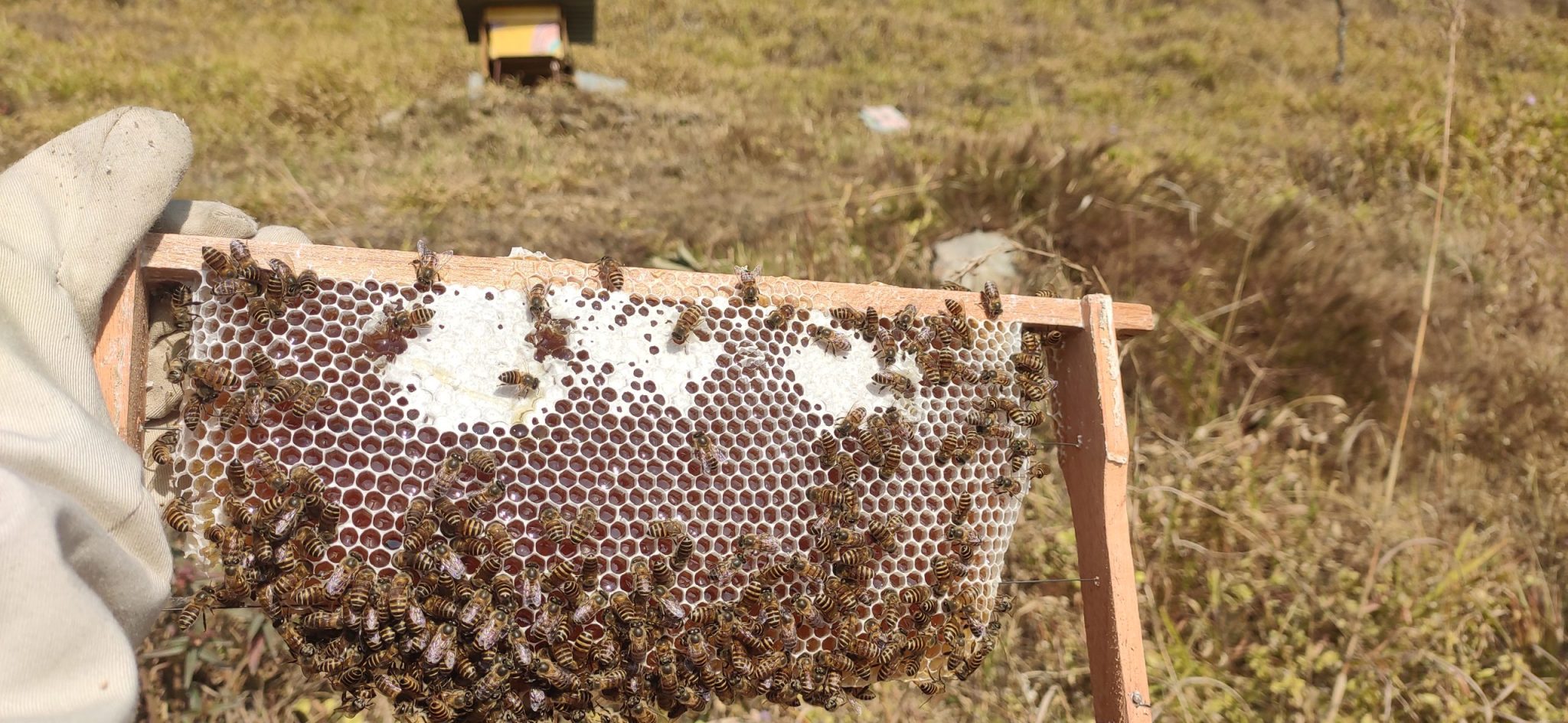
A roundup of bee health news from around the world this year, and what it means for beekeepers in Nepal.
United States: colony losses fall, but stay high
The latest U.S. Beekeeping Survey estimates that beekeepers in the United States lost 39.9% of their managed colonies between April 2025 and April 2026. That’s a big improvement on the record 55.6% loss reported the year before, but still far higher than beekeepers consider sustainable. Winter losses alone were around 30%.
The survey, run by researchers at Auburn University and Oklahoma State University with the Apiary Inspectors of America, collects data from thousands of beekeepers each year. Hobby beekeepers again reported higher losses than commercial operations. Varroa mites and the viruses they spread, poor nutrition, pesticides and extreme weather remain the main suspects.
The lesson for Nepal: the same mites and pressures affect Apis mellifera here. Regular mite monitoring and good nutrition are the foundations of colony survival. See our guide to pests and diseases.
Tropilaelaps mites spread towards Europe
Tropilaelaps mercedesae, a parasitic mite of honeybee brood native to Asia, is spreading west. Over the past few years it has been reported in Georgia and in southern Russia, and in 2026 the UK’s National Bee Unit reported its presence confirmed in an eastern region of Türkiye. Scientists and beekeeping organisations warn that it is likely to spread further into Europe.
New research published this year suggests that swarms can carry the mites to new colonies, where they continue to breed, one way the mite may spread over long distances. European beekeeping associations have asked the European Commission for tighter controls on imports of bees.
Why it matters here: in Asia, including Nepal, mellifera beekeepers have long had to manage Tropilaelaps alongside Varroa. Experience from Asia, especially the use of brood breaks (the mite can only survive a few days without brood), is now being studied by researchers preparing Europe for its arrival.
Closer to home: Nepal’s International Beekeeping Conference
In April 2026, the International Beekeeping Conference was held at the Agriculture and Forestry University in Rampur, Chitwan. It was organised by the university’s Faculty of Agriculture with the Ministry of Agriculture and Livestock Development and the Federation of Nepal Beekeepers. Researchers and beekeepers from around the world met to discuss pollination, beekeeping and bee products, with keynote speakers including leading bee scientists from Europe, Asia and North America.
Participants described it as Nepal’s first international beekeeping conference, a welcome sign of Nepal’s growing place in global bee science.
Sources
- Apiary Inspectors of America, 2025–2026 U.S. Beekeeping Survey results.
- APHA National Bee Unit (BeeBase), Tropilaelaps.
- Entomology Today, New research links honey bee swarms to the spread of an invasive mite, March 2026.
- Apimondia, High risk of spreading of Tropilaelaps mercedesae in Eastern Europe.
- Agriculture and Forestry University, International Beekeeping Conference.