
Key takeaways
- A honeybee colony has three types of bee: one queen, thousands of female workers, and seasonal male drones.
- Workers change jobs as they age, from cleaning cells to nursing, building comb, guarding and finally foraging.
- The queen’s scent (pheromones) holds the colony together; if she is lost, workers can raise a new queen from a young larva.
- Understanding the colony makes hive inspections much easier: eggs, larvae and capped brood tell you how the colony is doing.
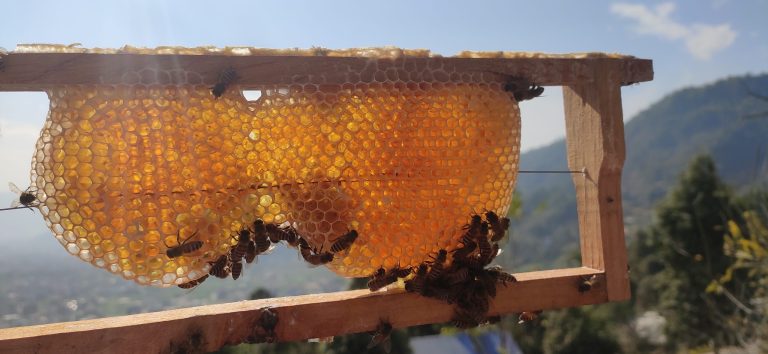
Open a hive in spring and it can look like chaos: thousands of bees crawling over each other on the comb. In fact, a honeybee colony is one of the most organised societies in nature. Every bee has a role, and together they behave almost like a single living thing, which is why beekeepers often call a colony a “superorganism”.
The figures below are for the European honeybee (Apis mellifera). The Asian honeybee (Apis cerana) works the same way, with smaller colonies and slightly shorter development times.
The three castes at a glance
| Queen | Worker | Drone | |
|---|---|---|---|
| Sex | Female | Female | Male |
| Number per colony | One | Thousands to tens of thousands | A few hundred, mainly in spring and summer |
| Egg to adult | About 16 days | About 21 days | About 24 days |
| Lifespan | Usually 1–3 years | About 5–6 weeks in the busy season; several months over winter | A few weeks to months |
| Main job | Laying eggs | Everything else | Mating with queens from other colonies |
| Sting | Yes (used against rival queens) | Yes | No |
The queen
There is normally only one queen in a colony, and her main job is to lay eggs. At the peak of the season, a strong mellifera queen can lay well over a thousand eggs a day.
A few days after emerging, a young queen flies out on mating flights and mates in the air with many drones. She stores their sperm for the rest of her life and never mates again. She can choose to fertilise each egg or not: fertilised eggs become females (workers or queens), and unfertilised eggs become drones.
The queen also releases pheromones, chemical signals that tell the colony she is present and healthy. These help keep workers from raising new queens and keep the colony working as one.
The workers
Workers are females that normally don’t lay eggs. They do all the work of the colony, and their jobs change as they get older:
- Cleaning (first few days): cleaning and polishing cells so the queen can lay in them.
- Nursing (roughly days 3–12): feeding larvae with brood food and royal jelly produced in glands in their heads.
- Building and processing (roughly days 12–18): producing wax to build comb, receiving nectar from foragers, and turning it into honey.
- Guarding (around days 18–21): defending the entrance against robbers, wasps and other intruders.
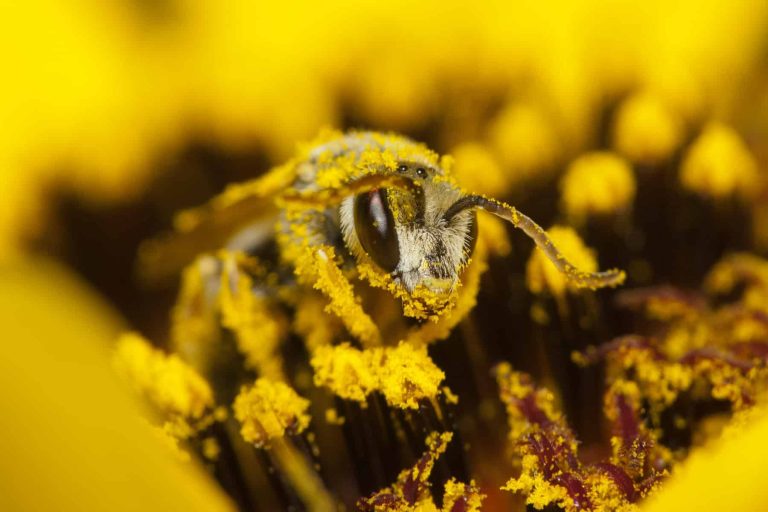
- Foraging (from about 3 weeks old): flying out to collect nectar, pollen, water and propolis for the rest of their lives.
This schedule is flexible. If the colony is short of foragers, younger bees can start foraging early, and older bees can return to nursing if needed. In the busy season a worker lives only about five to six weeks; she literally wears her wings out.
The drones
Drones are the colony’s males. They are larger than workers, with big eyes for spotting queens in flight. They don’t collect food, build comb or sting. Their purpose is to mate with young queens from other colonies, at gathering places in the air.
A drone that mates dies immediately afterwards. When food becomes scarce, in a dearth or as winter approaches, workers stop feeding the remaining drones and push them out of the hive.
From egg to bee
All three castes start the same way: the queen lays an egg in a cell, and it hatches after about three days. What happens next decides what the larva becomes:
- Worker larvae are fed royal jelly for a short time, then a mix of pollen and honey.
- Queen larvae are raised in large, peanut-shaped queen cells and fed royal jelly throughout. This rich diet is what turns a female larva into a queen instead of a worker.
- Drone larvae grow in larger cells with dome-shaped cappings.
After a few days of feeding, workers seal (cap) the cell with wax, and the larva turns into a pupa before emerging as an adult bee.
How a colony gets a new queen
Colonies raise new queens in three situations:
- Swarming: in spring, a crowded, strong colony raises new queens; then the old queen leaves with about half the bees to start a new home.
- Supersedure: when a queen is old or failing, workers quietly raise a replacement.
- Emergency: if the queen dies suddenly, workers turn a few young worker larvae into queens by flooding their cells with royal jelly.
What this means when you inspect a hive
- Eggs (tiny upright grains at the bottom of cells) mean the queen was laying within the last three days.
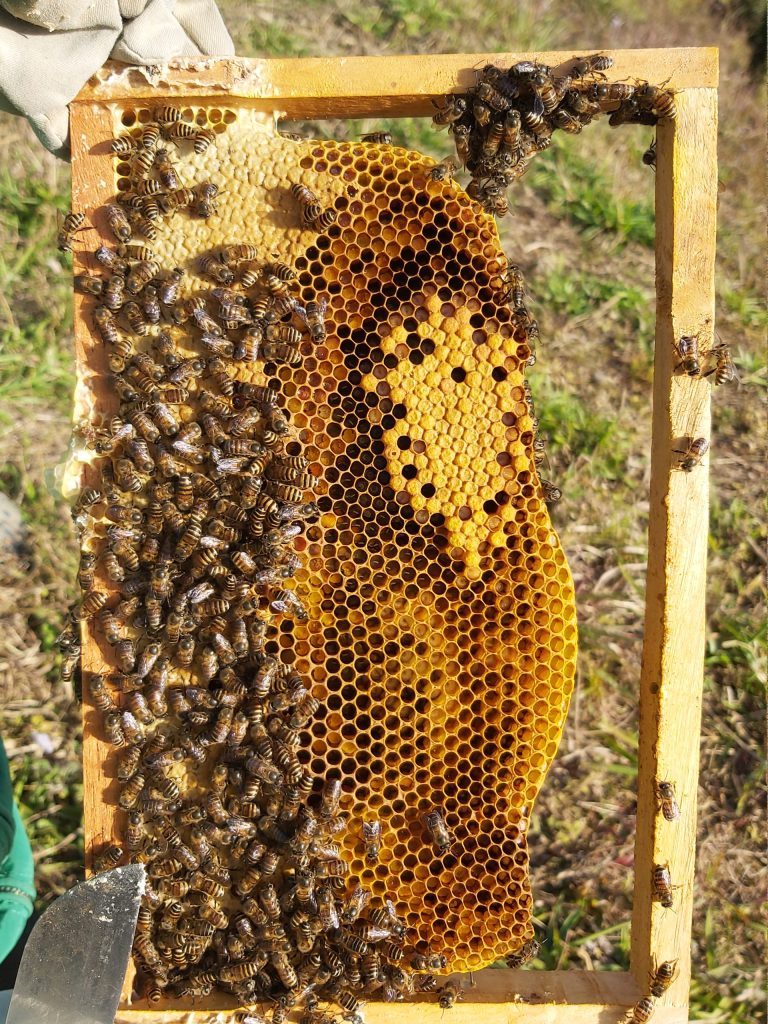
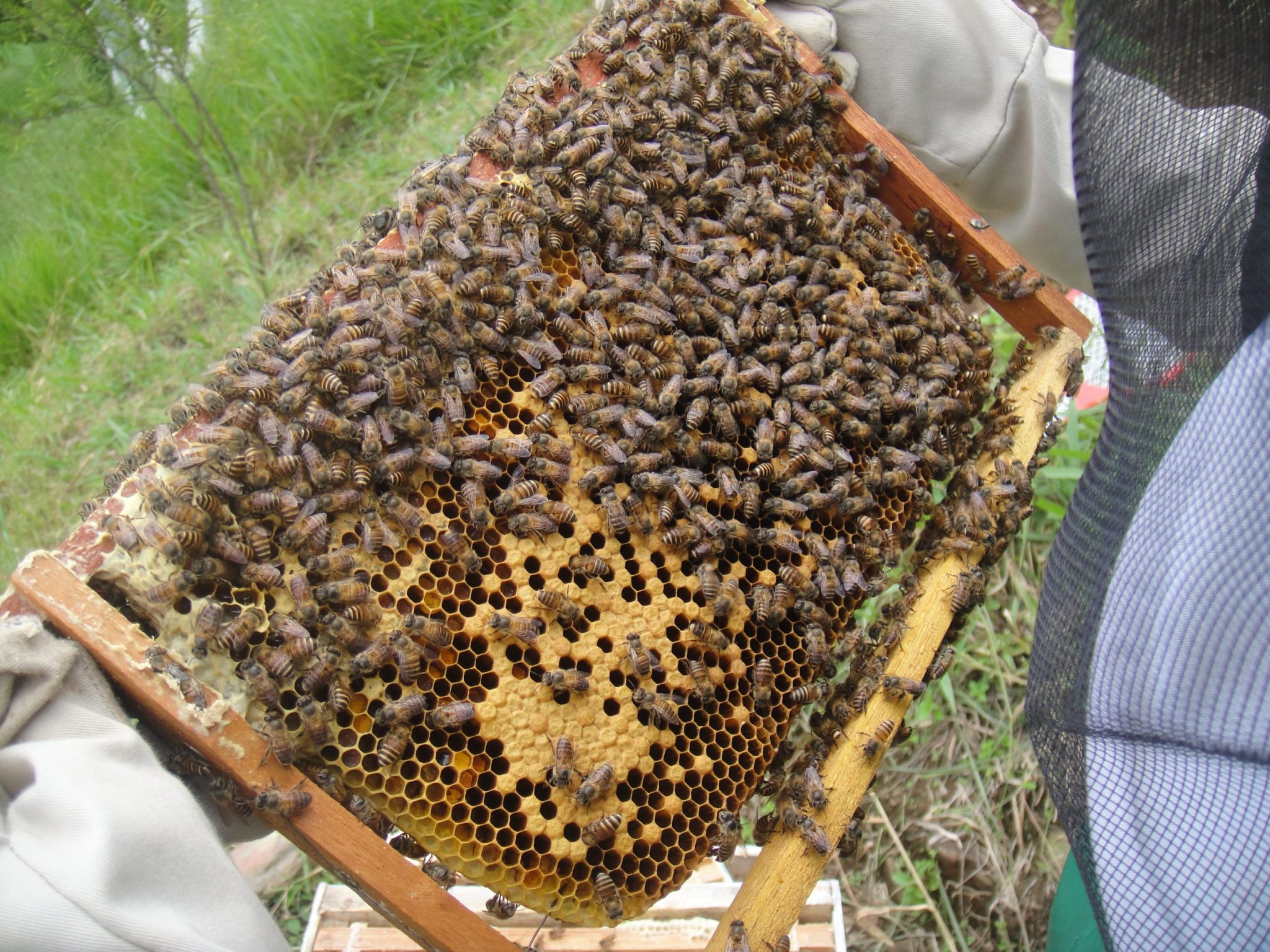
- A compact pattern of capped brood suggests a good queen. A scattered, patchy pattern can mean a failing queen or disease.
- Queen cells along the bottom edges of frames often mean swarm preparations; queen cells in the middle of a frame often mean the colony is replacing its queen.
- Many drones and drone cells on worker comb with no eggs can mean the colony has lost its queen and workers have started laying.
Learn the warning signs of disease in our guide to pests and diseases.
Sources and further reading
- Winston, M.L. (1987). The Biology of the Honey Bee. Harvard University Press.
- Seeley, T.D. (2010). Honeybee Democracy. Princeton University Press.