Key takeaways
- Aim for something in flower in every season, especially the monsoon and early spring, when bees struggle to find food.
- Choose simple, single flowers; heavily “double” flowers often have little nectar or pollen.
- Herbs, vegetables, fruit trees and local wild plants are some of the best bee plants, and many also feed your family.
- Skip pesticides on flowering plants, provide water, and leave a little wildness for wild bees to nest.
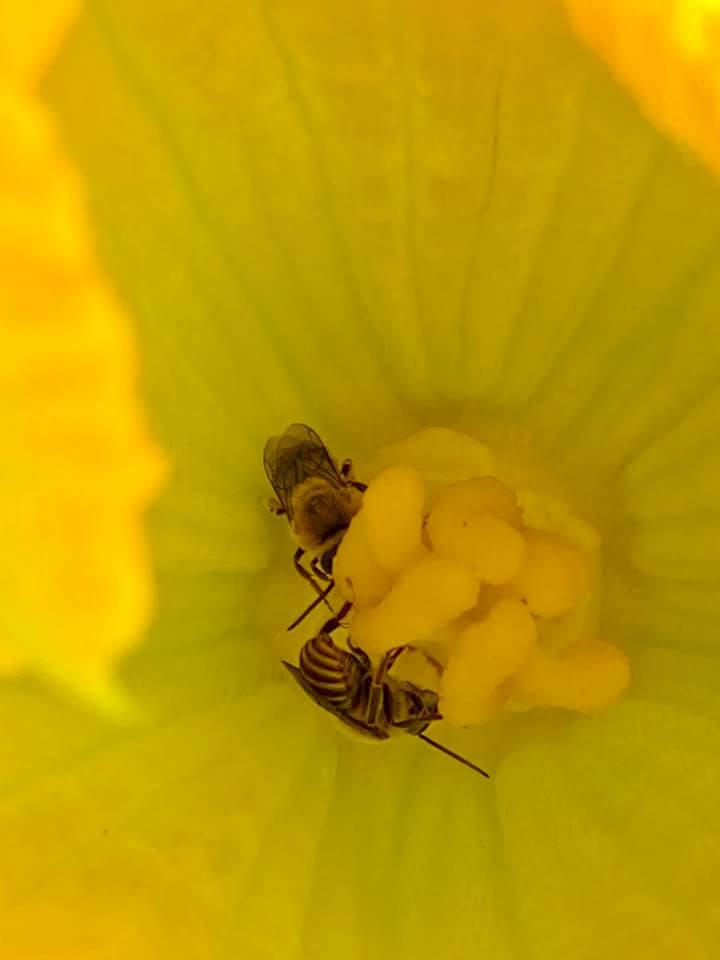
You don’t need hives to help bees. A garden, a few pots on a rooftop, or a field margin full of the right plants can feed honeybees and wild bees through the year. In return, bees will pollinate your vegetables and fruit trees. Many crops, from pumpkins and cucumbers to fruit trees, set much better fruit when bees visit.
Five rules for a bee-friendly garden
- Flowers in every season. Bees need food all year, and gaps hurt them most. Plan for something in flower from early spring to late autumn, and look for plants that flower in the monsoon.
- Keep flowers simple. Single flowers with an open centre, such as cosmos, sunflower and single marigolds, give bees easy access. Many showy “double” varieties have little nectar or pollen.
- Plant in groups. A patch of the same flower is easier for bees to find and work than single scattered plants.
- Go easy on chemicals. Never spray flowering plants with insecticides. If you must spray, do it in the evening when bees aren’t flying.
- Provide water and shelter. A shallow dish of water with stones for landing, some bare ground, dead stems and old wood give wild bees places to drink and nest.
Bee plants for Nepal, season by season
Flowering times vary with altitude, so these are approximate.
| Season | Garden flowers | Herbs and vegetables | Trees and shrubs |
|---|---|---|---|
| Winter (Nov – Feb) | Calendula, nasturtium | Mustard and mustard greens (let some flower), radish and turnip left to flower | Loquat, early citrus |
| Spring (Feb – May) | Sunflower, single dahlias, cornflower | Coriander, onion and garlic left to flower | Litchi, citrus, peach, plum, apple (hills), bottlebrush, sisau, rhododendron (high hills) |
| Monsoon (Jun – Sep) | Cosmos, zinnia, single marigold, sunflower | Pumpkin, cucumber and gourds, sesame, basil/tulsi, mint | Guava, drumstick (moringa) |
| Autumn (Sep – Nov) | Cosmos, single marigold | Buckwheat, niger, mint and basil in flower | Chiuri, rudilo |
Plants in bold are particularly valuable to bees in Nepal.
Small space? Start with these
No room for trees? These grow well in pots or small beds and are loved by bees:
- Tulsi (holy basil) and other basils: flower for months and attract many bees.
- Coriander: let a few plants flower in spring.
- Cosmos and single marigolds: easy, colourful and long-flowering.
- Mint: grow it in a pot, as it spreads, and let it flower.
- Pumpkins or gourds up a fence or wall: food for you, big flowers for bees.
Farmers: easy wins for bees
- Let a strip flower. A few metres of mustard, buckwheat or coriander left to flower at a field edge can feed bees through a gap.
- Keep hedges and trees. Field boundaries with flowering shrubs and trees are important food and nesting sites.
- Time your spraying. Avoid spraying crops in flower, spray in the evening, and tell nearby beekeepers in advance.
- Bees boost yields. Many crops, including mustard, buckwheat, fruit trees and cucurbits, produce better yields and quality when they are well pollinated.
Why it matters
Bees are under pressure everywhere: from habitat loss, pesticides and changing weather. Every flowering patch helps, especially in towns and intensively farmed areas where food is scarce. A bee-friendly garden is one of the simplest, most positive things anyone can do for nature, and you’ll be rewarded with better harvests and a garden full of life.
Want to know more about the bees you’ll attract? Read The Bees of Nepal.