
Key takeaways
- Harvest only ripe honey: frames that are mostly capped, with a water content of about 18–19% or less.
- Take only the surplus. Never take brood combs, and always leave the colony enough stores, especially before the monsoon.
- Keep everything clean and dry, from the honey house to the jars.
- Strain and settle honey, but don’t overheat it; heat damages flavour and quality.
Harvest day is the reward for a season of work. Done well, it gives you clean, ripe honey that keeps for years, and leaves a colony strong enough to carry on. Done badly, it can ferment your honey and starve your bees.
When is honey ready?
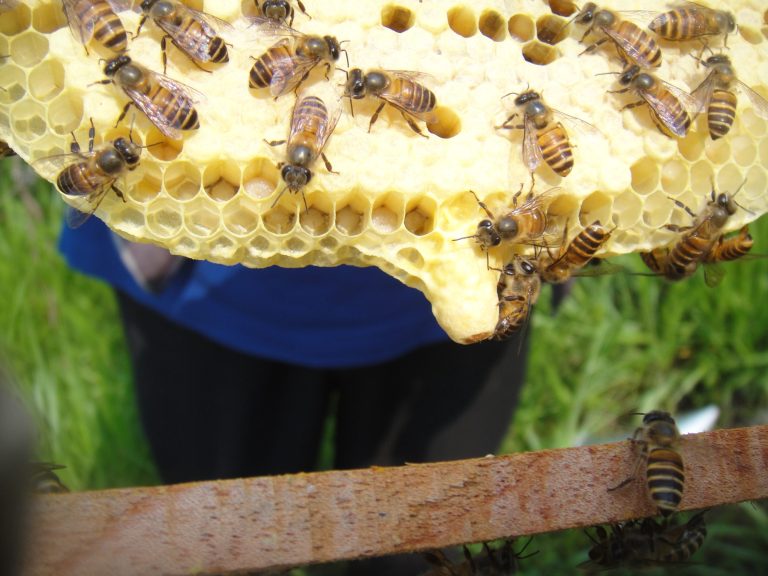
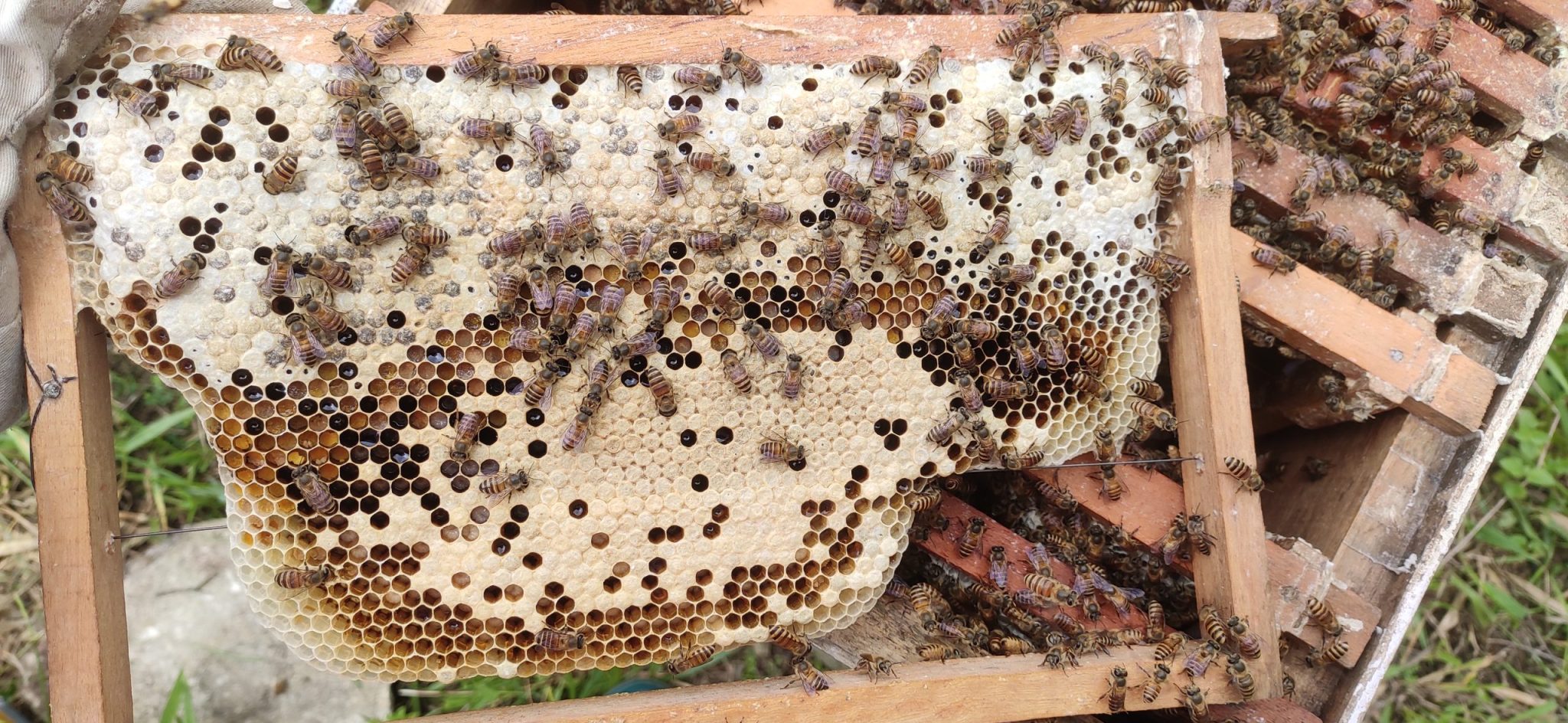
- Mostly capped: bees seal cells with wax when the honey is ripe. As a rule of thumb, harvest frames that are at least about three-quarters capped.
- Shake test: hold an uncapped frame horizontally over the hive and give it a sharp shake. If nectar rains out, it isn’t ready.
- Measure moisture: a honey refractometer gives an accurate reading. International standards set a maximum of 20% water; aim for 18–19% or less to keep honey from fermenting, especially in Nepal’s humid climate.
Harvesting too early, or during the monsoon when honey absorbs moisture from the air, risks fermented, sour honey.
Take only the surplus
- Never harvest brood combs. Combs with eggs, larvae or pupae are the colony’s future, and crushed brood contaminates honey.
- Leave stores for the bees. Think about what comes next. Before the monsoon, or before winter in the hills, leave the colony enough honey to survive. See Seasonal Hive Care.
- Use a queen excluder if you can. In frame hives, a queen excluder between the brood box and the honey box keeps the queen and brood out of your harvest frames.
Traditional log and wall hives: honey is often cut from the back of the hive. Cut only the honey combs, usually the ones furthest from the entrance, and leave the brood combs in place. Squeezing whole combs, including brood, gives poor-quality honey and harms the colony.
Taking the frames
- Choose a warm, dry day during a nectar flow if possible. Bees are calmer and less likely to rob.
- Remove bees from the honey frames by gently brushing them back into the hive, or by using a bee escape board placed under the honey box a day before harvest.
- Put frames straight into a covered box so robber bees can’t reach them.
- Work quickly, and never leave honey or wax lying around the apiary: it can trigger robbing that spreads to every hive.
Extracting
Work in a clean, bee-proof room with washed hands, clean equipment and food-grade containers.
- Uncap the frames with an uncapping knife or fork, catching the cappings in a clean tray. Cappings make excellent beeswax.
- Spin the frames in a honey extractor. Start slowly so heavy frames don’t break, then turn them and spin the other side.
- Strain the honey through a double sieve or a fine cloth to remove wax and bee parts.
- Settle the honey in a covered tank for a day or two. Air bubbles and fine wax rise to the top and can be skimmed off.
- Bottle into clean, completely dry jars, and seal them tightly.
No extractor? Comb honey can be cut and sold as it is, or crushed and strained. Just make sure only honey comb, never brood, goes in.
Don’t heat honey to make extraction or bottling easier. Heating above about 40 °C damages natural enzymes, darkens the honey, changes its flavour and raises its HMF level, a marker that buyers and labs use to detect heat-damaged honey.
After the harvest
- Return wet frames to the colonies in the evening for the bees to clean, or store them protected from wax moth.
- Render the cappings into beeswax. See Beyond Honey.
- Label your jars with what the honey is, where and when it was harvested, and your name and contact. Honest labelling builds trust. See Real vs Fake Honey.
- Store honey in a cool, dry place out of the sun. It will probably crystallise, which is perfectly normal. See Why Does Honey Crystallise?
- Record the harvest: how much from each hive, and what flowers it came from. It will help you plan next year.