Key takeaways
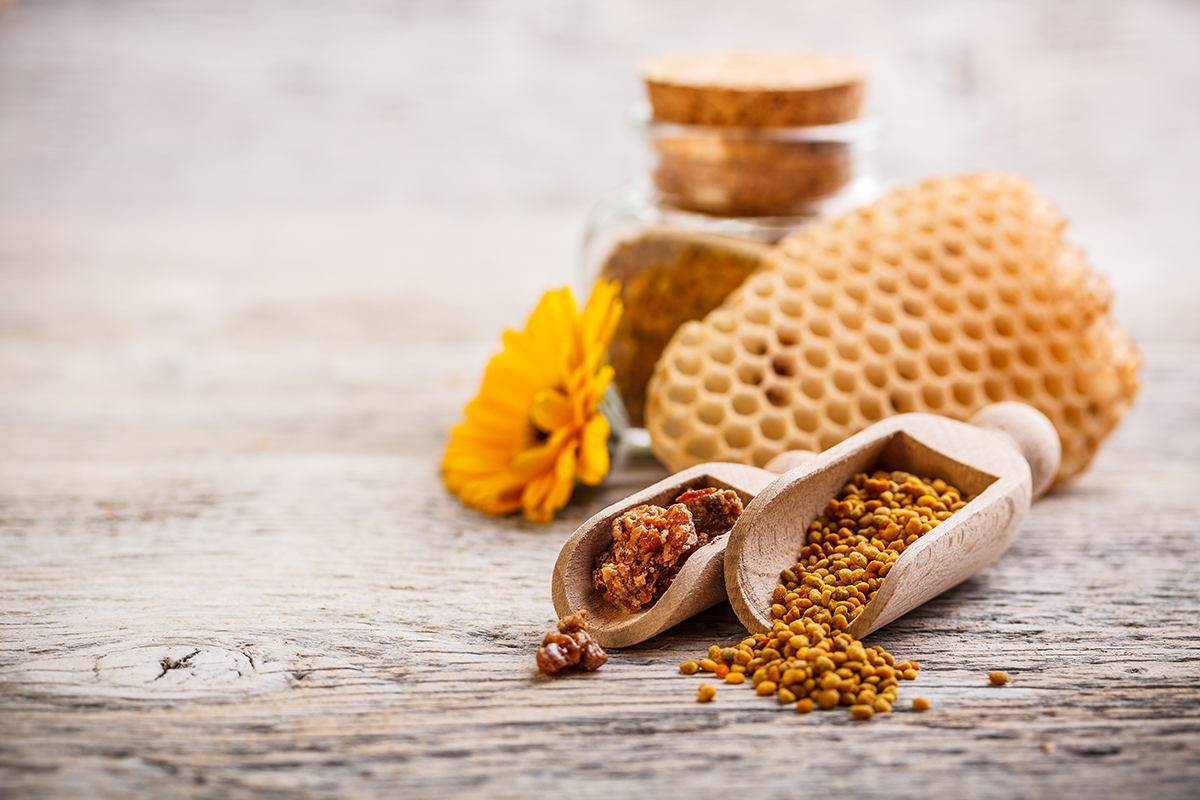
- Beeswax is made by young worker bees and used for candles, balms, cosmetics and food wraps.
- Propolis is a sticky resin that bees collect from plants to seal and protect their hive.
- Bee pollen is the colony’s protein food; royal jelly is the special food that turns a larva into a queen.
- Many health claims for hive products go well beyond the evidence, and some people are allergic to them.
Honey gets the attention, but a beehive is a factory for several remarkable materials. Each has a job in the colony, and people have used most of them for thousands of years.
Beeswax
What it is
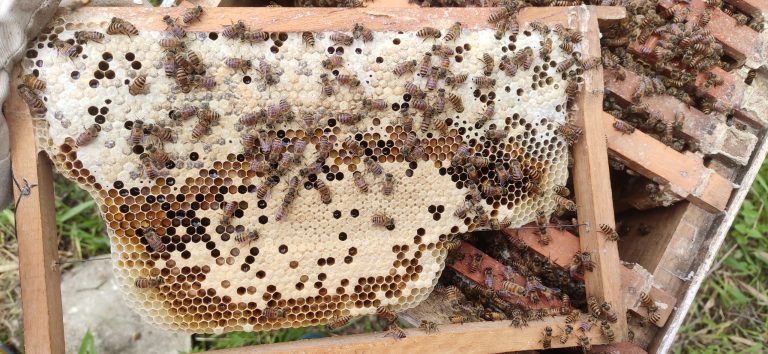
Young worker bees, usually around two weeks old, produce wax from glands on the underside of their abdomen. It comes out as tiny clear flakes, which they chew and shape into the hexagonal cells of the comb. The colony needs a lot of energy to make wax, which is one reason beekeepers reuse drawn combs.
How it’s harvested
Beekeepers collect wax mainly from cappings cut off at harvest and from old combs. It is melted in water, strained and left to set into blocks. Fresh beeswax is pale yellow, and its colour darkens with age, pollen and propolis.
Uses
- Candles: beeswax candles burn slowly and brightly, with a light honey scent.
- Balms and salves: beeswax helps lock moisture into skin and lips, which is why it’s a base for lip balms and skin salves, like our Himalayan Lipcare and Himalayan Salve.
- Food wraps, polishes and waterproofing for wood, leather and thread.
- Foundation sheets for beehives, giving bees a head start on building comb.
Propolis
What it is
Propolis, sometimes called “bee glue”, is a sticky, resinous material that bees collect from tree buds and bark. They use it to seal cracks, narrow entrances, varnish the inside of the hive and even entomb intruders too large to remove. Its colour and composition depend on the local plants.
What the evidence says
Propolis contains many plant compounds, and laboratory studies show it has antibacterial, antifungal and antioxidant activity. It is used in throat sprays, lozenges, ointments and tinctures. However, good-quality clinical evidence for most health claims in people is still limited, and the strength of products varies widely.
Bee pollen
What it is
Foragers pack pollen from flowers into the “baskets” on their back legs and carry it home as tiny coloured pellets. Pollen is the colony’s main source of protein, fats, vitamins and minerals, essential for raising brood. Beekeepers collect it using pollen traps at the hive entrance, which brush some of the pellets off returning bees.
What the evidence says
Bee pollen is nutritious and is eaten as a supplement, sprinkled on food or yoghurt. Many of the bigger claims made for it, such as boosting energy or curing allergies, are not well supported by evidence. Pollen should be collected only from strong colonies, and never so much that the bees go short.
Royal jelly
What it is
Royal jelly is a milky secretion produced by glands in the heads of young nurse bees. All young larvae receive some, but larvae destined to become queens are fed it throughout their development. It is this diet that turns a female larva into a queen rather than a worker. See Inside the Hive.
What the evidence says
Royal jelly is produced by stimulating colonies to raise many queen cells, then harvesting the jelly from each cell, which is labour-intensive, so it is expensive. It is sold as a supplement and used in cosmetics. Research is ongoing, but evidence for most health claims is weak, and royal jelly has been linked to serious allergic reactions in some people.
Allergies are real. Bee pollen, propolis and royal jelly can all cause allergic reactions, which can occasionally be severe, especially in people with asthma, pollen allergies or allergy to bee stings. Try only a tiny amount first, and talk to a doctor before using hive products if you are pregnant, take regular medicines, or have a history of allergies. Never give honey to babies under 12 months.
Bee venom
Bee venom is collected for research and for “apitherapy”, and it is used in medical allergy immunotherapy to desensitise people allergic to stings, under strict medical supervision. Outside medical settings, deliberately being stung carries a real risk of dangerous allergic reactions.
Buying hive products
- Buy from beekeepers who can tell you where and how products were collected.
- Be wary of dramatic health claims. Hive products are natural and interesting, but they’re not cures.
- For honey itself, read Real vs Fake Honey and How Bees Make Honey.
Sources and further reading
- Bogdanov, S. Beeswax, Propolis, Pollen and Royal Jelly chapters, Bee Product Science.
- Crane, E. (1990). Bees and Beekeeping: Science, Practice and World Resources. Heinemann Newnes.