
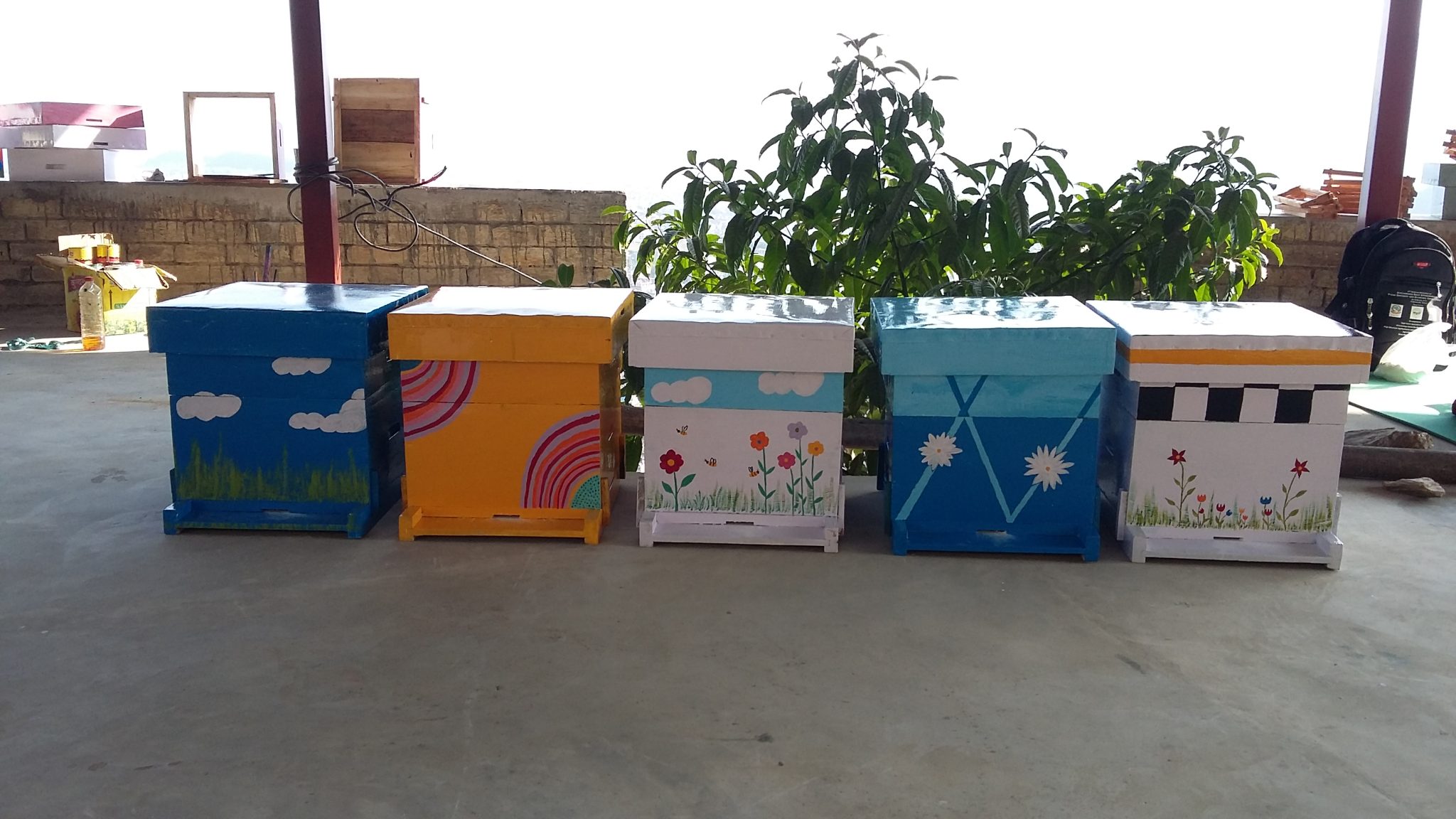
Key takeaways
- The monsoon is the main hungry season. Check stores and feed sugar syrup before colonies run short.
- Keep hives dry and raised, with entrances reduced to help colonies defend against robbers, wax moth and hornets.
- In the hills in winter, go in with strong, well-fed colonies, combine weak ones, and keep inspections brief.
- In the Terai summer, heat is the danger: provide shade, water and ventilation.
Nepal’s beekeeping year has two very different hard seasons. In the monsoon, rain keeps bees indoors and few plants flower. In winter, mustard fields feed bees in the Terai, but colonies in the hills face cold and short days. Good management at these times decides whether you start the next season with strong colonies or empty boxes.
Before the monsoon (Jestha – Asar)
- Harvest carefully. Leave the colony plenty of honey; don’t take the last frames of stores just before a dearth.
- Check every colony’s stores. As a rough guide, a colony going into the monsoon should have several frames with good honey stores, depending on its size and your area.
- Combine weak colonies. A weak colony is unlikely to survive the monsoon and will attract robbers, wax moth and hornets. Uniting two weak colonies makes one that can.
- Treat for mites if needed while the weather still allows, using approved treatments. See Pests and Diseases.
- Repair roofs and stands. Make sure lids are watertight and stands are firm.
During the monsoon (Asar – Bhadra)
Feeding
When frames get light and no nectar is coming in, feed sugar syrup inside the hive:
- Thinner syrup, about 1 part sugar to 1 part water by weight, helps keep the queen laying and the colony active.
- Thicker syrup, about 2 parts sugar to 1 part water, is better for building up stores.
Use only plain white sugar dissolved in clean water. Never feed honey from other colonies, which can spread disease. Feed in the evening, inside the hive, and never spill syrup outside: it can start a robbing frenzy.
Never feed sugar syrup while honey boxes for harvest are on the hive. Bees store the syrup as “honey”, and selling it is adulteration. Remove honey boxes first. See Real vs Fake Honey.
Keeping hives dry and defended
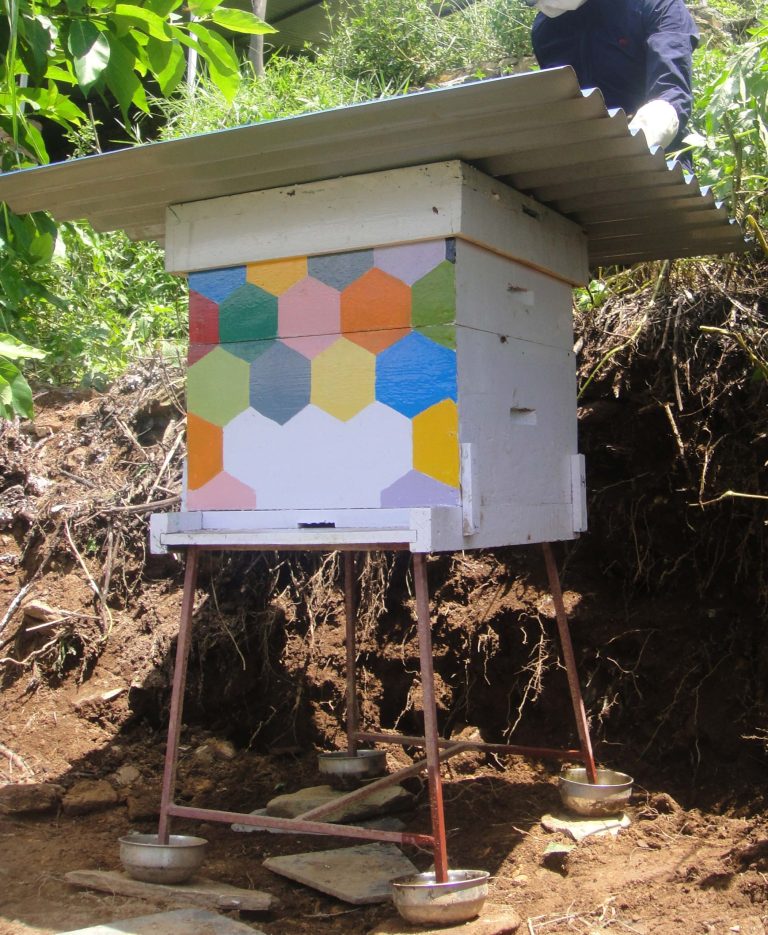
- Keep hives raised on stands, with a slight forward tilt so rain runs out of the entrance.
- Stand legs in water or oil cups to stop ants, which become a bigger problem in the rains.
- Reduce entrances so guards can defend against robbers and wasps.
- Remove spare, unused combs from weak hives and store them safely, as wax moth thrives in the humid heat.
- Watch for hornets from late monsoon into autumn, and act quickly.
- Inspect only when you need to, choosing breaks in the rain.
Autumn: rebuilding (Ashwin – Kartik)
As buckwheat, rudilo and other autumn flowers bloom, colonies rebuild. This is the time to:
- Requeen colonies with old or poor queens, so they go into winter with young, productive queens.
- Prepare for the winter flow in the Terai: strong colonies are needed to make the most of mustard. See Nepal’s Honey Calendar.
- Keep defending against hornets.
Winter in the hills (Mangsir – Magh)
At higher altitudes, colonies cluster to keep warm and live on their stores.
- Go into winter strong. Combine weak colonies in autumn; a big cluster keeps warm far more easily than a small one.
- Make sure there’s enough food above and around the cluster, and feed thick syrup in autumn if stores are short.
- Reduce space. Remove empty frames or boxes so the colony doesn’t have to heat unused space.
- Shelter from the wind, and place hives to catch the winter sun.
- Inspect briefly and only on warm, sunny days around midday. Opening a hive in the cold chills the brood.
- Keep out rodents and wind with entrance reducers.
Summer heat in the Terai (Baisakh – Jestha)
In the hottest weeks before the monsoon, heat can melt combs and stress colonies:
- Shade hives in the afternoon, with trees, shade cloth or a simple roof.
- Make sure there is clean water close by; bees use it to cool the hive.
- Give ventilation: a slightly raised lid or screened openings help, but don’t open the hive so much that robbers get in.
- Paint hives a light colour to reflect heat.
A simple seasonal checklist
| Season | Main risks | Key tasks |
|---|---|---|
| Pre-monsoon | Overharvesting, weak colonies | Leave stores, combine weak colonies, mite control, repair hives |
| Monsoon | Starvation, robbing, wax moth, ants | Feed syrup, reduce entrances, keep hives dry, protect combs |
| Autumn | Hornets, old queens | Requeen, defend entrances, build up for winter flows |
| Winter (hills) | Cold, starvation | Strong colonies, enough stores, reduce space, minimal inspections |
| Summer (Terai) | Heat | Shade, water, ventilation |