
Key takeaways
- Migratory beekeepers move hives to follow flowering crops and forests through the year, which can greatly increase honey yields.
- In Nepal, the classic pattern is winter mustard in the Terai, followed by spring and autumn flows elsewhere.
- Moving bees is stressful for colonies and costly. Plan routes, secure hives and move at night.
- Agree terms with landowners, avoid areas being sprayed, and never move sick colonies.
A single apiary can only collect what flowers within a few kilometres of it. Migratory beekeepers solve this by taking their bees to the flowers, moving hives by truck or tractor to wherever the next big flow is about to begin. In Nepal, this is how many commercial Apis mellifera beekeepers make a living.
A typical year on the move
Routes differ from one beekeeper to another, but a common pattern looks like this:
| Season | Where bees go | Main flowers |
|---|---|---|
| Kartik – Poush (Oct – Jan) | Terai and inner Terai, e.g. Chitwan | Mustard and rapeseed |
| Kartik – Magh (Oct – Feb) | Chure hills and forest edges | Chiuri |
| Falgun – Chaitra (Feb – Apr) | Terai orchards and plains | Litchi, sisau, spring crops |
| Baisakh – Jestha (Apr – Jun) | Terai and valleys | Sunflower, summer crops, wild flowers |
| Shrawan – Bhadra (Jul – Sep) | Holding sites with some forage | Monsoon dearth; feeding needed |
| Ashwin – Kartik (Sep – Nov) | Mid-hills | Buckwheat, rudilo |
See Nepal’s Honey Calendar for more on these flows.
Benefits
- More honey: colonies can work several major flows a year instead of one.
- Distinct honeys: separate harvests from mustard, chiuri, litchi or buckwheat can be sold as single-flower honeys.
- Pollination: farmers with mustard, fruit and other crops often welcome beehives, and some pay for pollination services, because bees improve yields.
Risks and costs
- Stress on colonies: moving disrupts foraging, can overheat bees and can lead to queen loss.
- Disease spread: moving hives between regions carries mites and diseases with them.
- Pesticides: hives placed near sprayed crops can be poisoned.
- Weather: a whole season can be lost if rain or cold hits the flow, as in Chitwan in 2026 (read the news).
- Overcrowding: too many hives in one area means less nectar per hive, and more competition with local and wild bees.
- Costs: transport, labour, site rent and time away from home all add up.
How to move hives safely
Before the move
- Check the site: forage, water, access by road, safety from floods, and permission from the landowner. Agree on the terms in advance, including any rent or honey share.
- Ask about spraying plans on nearby crops.
- Only move healthy colonies. Check for disease and treat mites before moving.
- Secure the hives: frames tight together, boxes strapped or nailed, lids fixed.
- Give ventilation: use screened entrances or ventilation screens. Closed-up bees can overheat and die within hours.
On moving day
- Close entrances at night or very early in the morning, once all foragers are home.
- Load carefully, with frames parallel to the direction of travel to reduce swaying, and hives tied down firmly.
- Travel in the cool of the night or early morning, and avoid long stops in the sun.
- Carry water to spray on hives if they get hot, and a veil and smoker for emergencies.
At the new site
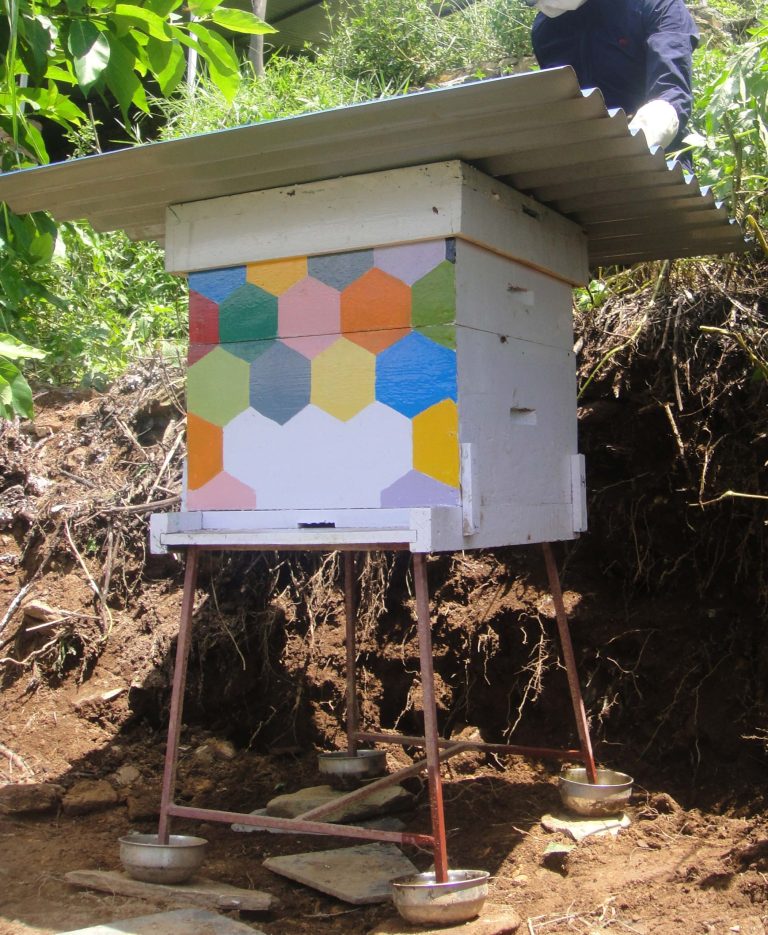
- Place hives on stands, spread out a little, with entrances facing different directions to reduce drifting between hives.
- Open entrances once all hives are in place, ideally after a short rest.
- Inspect after a few days to check that queens are laying and colonies have settled.
Is migratory beekeeping right for you?
It suits beekeepers with many colonies, access to transport, and the time and experience to manage bees across several sites. Beginners are usually better off starting with a few hives in one place and learning their local flowers. See Your First Hive and Apis cerana vs Apis mellifera.