
Key takeaways
- Apis cerana is native to Nepal. It is hardy in the hills, tolerates Varroa mites and defends itself against hornets, but it produces less honey and is more likely to abscond.
- Apis mellifera produces much more honey and is calmer to work with. It needs more investment, regular mite control and plenty of forage, and does best in the Terai and lower hills.
- The two species cannot interbreed, and keeping them close together can spread disease and cause robbing.
- Hill farmers and beginners often start with cerana; commercial producers near large mustard areas usually choose mellifera.
Two honeybee species are kept in hives in Nepal: the native Asian honeybee, Apis cerana, and the European honeybee, Apis mellifera. Nepal is also home to three wild honeybees: the giant honeybee (Apis dorsata), the Himalayan cliff bee (Apis laboriosa) and the dwarf honeybee (Apis florea). These build single open combs on cliffs, trees and bushes and cannot be kept in boxes.
If you are starting out, or thinking of expanding, the first big decision is which of the two hive bees to keep. Here is how they compare.
Meet the two bees
Apis cerana: the Asian honeybee
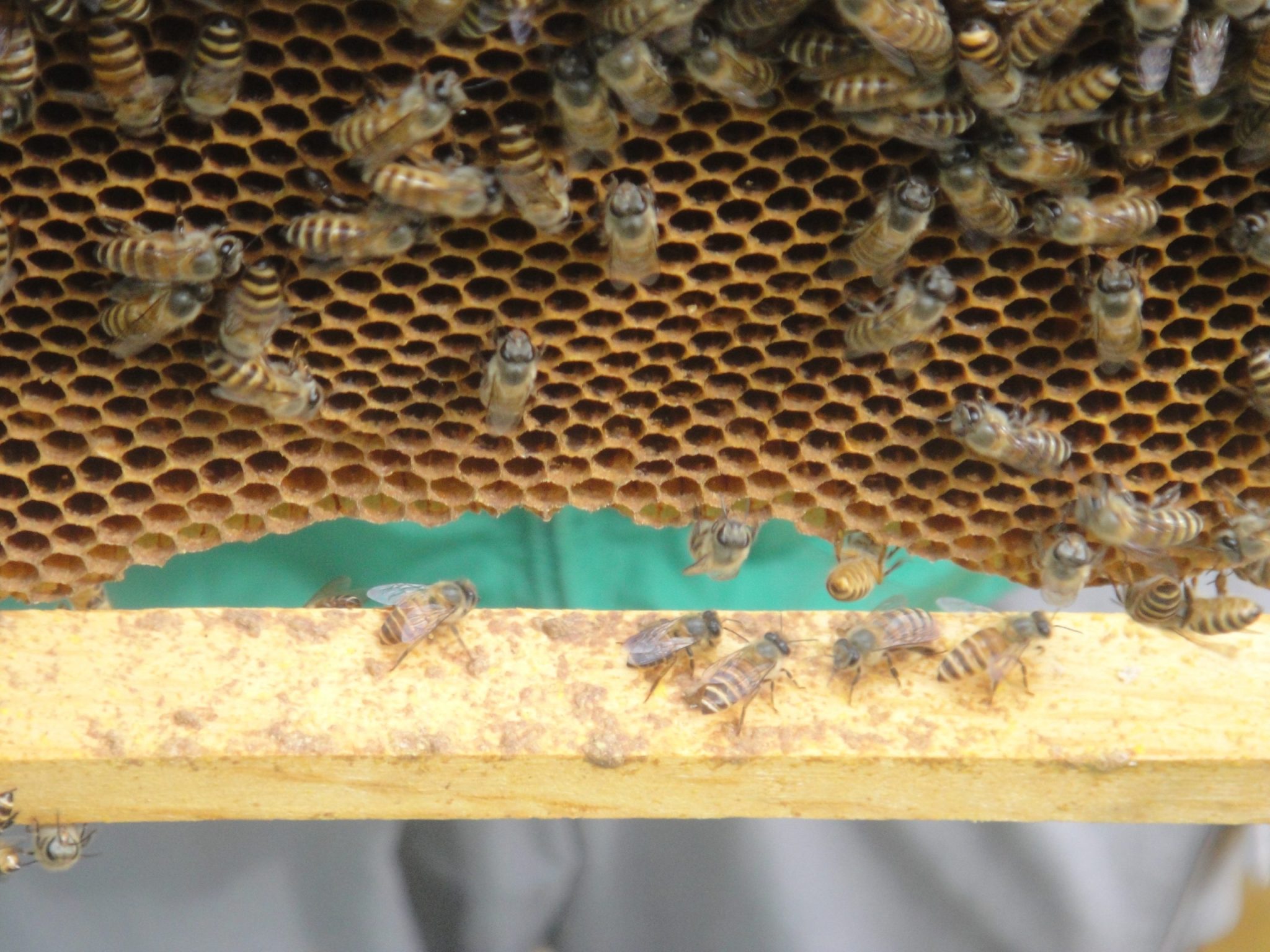
Apis cerana has lived in Nepal’s forests and farmlands for thousands of years. Traditionally it was kept in hollow logs and in cavities built into the walls of village houses, and many farmers in the hills still keep it this way. Today it is also kept in small frame hives.
Cerana is smaller than mellifera and lives in smaller colonies. It is well adapted to local conditions: it forages in cool weather, makes good use of scattered wild flowers, and is kept across a wide range of altitudes, including mid and high hills where mellifera struggles.
Apis mellifera: the European honeybee
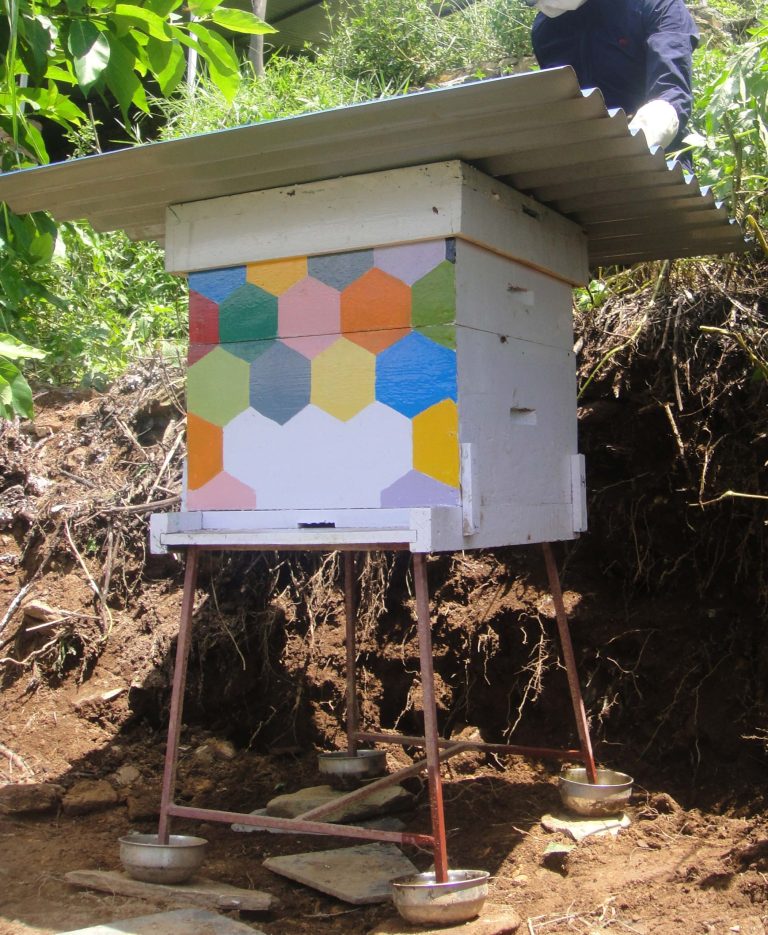
Apis mellifera was introduced to Nepal in the 1990s and has since become the main bee for commercial honey production, especially in the Terai and inner Terai, where large areas of mustard, buckwheat and other crops flower. It is kept in Langstroth hives and builds large, populous colonies that can collect a lot of nectar in a short flowering season.
Side-by-side comparison
| Apis cerana | Apis mellifera | |
|---|---|---|
| Origin | Native to Nepal | Introduced |
| Colony size | Smaller | Large |
| Honey yield* | Lower: a few kg to around 10 kg per hive per year | Much higher: often 20–40 kg or more per hive per year |
| Hive type | Traditional log or wall hives, or small frame hives | Langstroth hives |
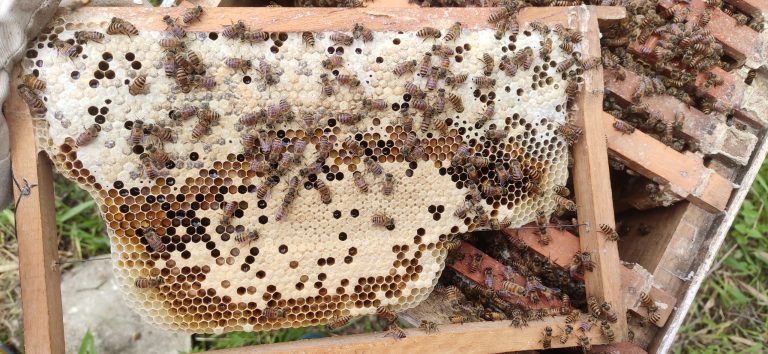
| Handling | Gentle but nervous; bees run about on the comb | Calm on the comb and easy to inspect (varies by strain) |
| Absconding and swarming | Colonies often abscond (leave the hive entirely) when disturbed, short of food or under pest pressure | Rarely absconds; swarming can be managed |
| Varroa mites | Highly tolerant; its original host, and it keeps mites in check by grooming | Very susceptible; needs regular monitoring and treatment |
| Hornets | Strong defence; workers surround attacking hornets and “heat-ball” them | Weak defence; hornets can destroy weak colonies in autumn |
| Main disease risk | Thai sacbrood virus, which has caused heavy colony losses in Nepal and across South Asia | Brood diseases such as European foulbrood, and Tropilaelaps and Varroa mites |
| Food needs | Usually self-sufficient on local forage | Often needs sugar feeding during dearth periods such as the monsoon |
| Start-up cost | Low | Higher: colonies, equipment, treatments and transport |
| Best suited to | Hill farms, small-scale and hobby beekeeping, crop pollination at home | Commercial honey production, migratory beekeeping, pollination services |
*Yields vary widely with forage, season, colony strength and management. Treat these figures as rough guides.
Why you shouldn’t mix them in one apiary
- They cannot interbreed. They are separate species, so you can’t cross them to combine their strengths.
- Robbing. During a food shortage, strong mellifera colonies often rob honey from smaller cerana colonies, which can then abscond or collapse.
- Pests and disease. Keeping them side by side makes it easier for mites and diseases to move between colonies.
- Competition for flowers. In areas with limited forage, large mellifera apiaries can outcompete local cerana colonies and wild pollinators.
If you keep both, place the apiaries well apart.
How to choose: five questions
- Where is your farm? At higher altitudes, or where flowers are scattered rather than in large crop fields, cerana is usually the better fit. In the Terai and valleys with big flowering crops, mellifera can reach its potential.
- What is your goal? If you want honey as your main income, mellifera’s higher yields matter. If you want pollination for your own crops, some honey for the family, or a low-cost start, cerana makes sense.
- Can you move your hives? Many commercial mellifera beekeepers move hives several times a year to follow flowering crops. If you can’t, look carefully at what flowers within 2–3 km of your apiary through the whole year.
- What can you invest? Mellifera needs more money up front and ongoing costs for feeding and mite treatment. Cerana costs less, but absconding can mean losing colonies.
- How much experience do you have? Mellifera is easier to handle day to day but less forgiving of poor disease management. Cerana needs patience and gentle handling. Either way, training first will save you colonies and money.
Getting started
- Get trained. Beekeeping courses are offered by agriculture offices, cooperatives and experienced beekeepers. Read the government’s Good Beekeeping Practice Directive and the Beekeeping Booklet, both in Nepali.
- Buy healthy colonies from local beekeepers. Check for a laying queen, plenty of brood, enough stored food, and no signs of disease.
- Start with two or three hives rather than one. If one colony loses its queen or weakens, you can combine colonies or share brood between them.
- Plan your forage. Note what flowers near your apiary in each season, and plant bee-friendly crops and trees to fill the gaps.
Sources and further reading
- Oldroyd, B.P. and Wongsiri, S. (2006). Asian Honey Bees: Biology, Conservation, and Human Interactions. Harvard University Press.
- FAO (1986). Beekeeping in Asia. FAO Agricultural Services Bulletin 68/4.
- ICIMOD publications on indigenous honeybees and beekeeping in the Hindu Kush Himalaya.